
Ruins of the Encampment, a Maqam Opera in Arabic
Ruins of the Encampment, a Maqam Opera in Arabic
Amir ElSaffar
Amir ElSaffar
Ruins of the Encampment is a new Arabic-language work that I am currently composing, based on the epic pre-Islamic poems known as Al-Mu’allaqat. The opera reimagines ancient narratives within the context of contemporary Middle Eastern experiences. The work will be one of only a few operas composed in the Arabic language and one of the first to circulate outside the Arab world, and likely the only to engage with the Maqam modal system. Inscribed on UNESCO’s list of the Intangible Cultural Heritage of Humanity, Iraqi Maqam is a sophisticated melodic repertoire organized into long-form compositions set to classical Arabic poetry. These melodies hail from the diverse populations that have inhabited Iraq over centuries, embodying the history, legends, and stories of Iraqi society, and are part of a larger Maqam modal system that spans from Morocco to Western China.
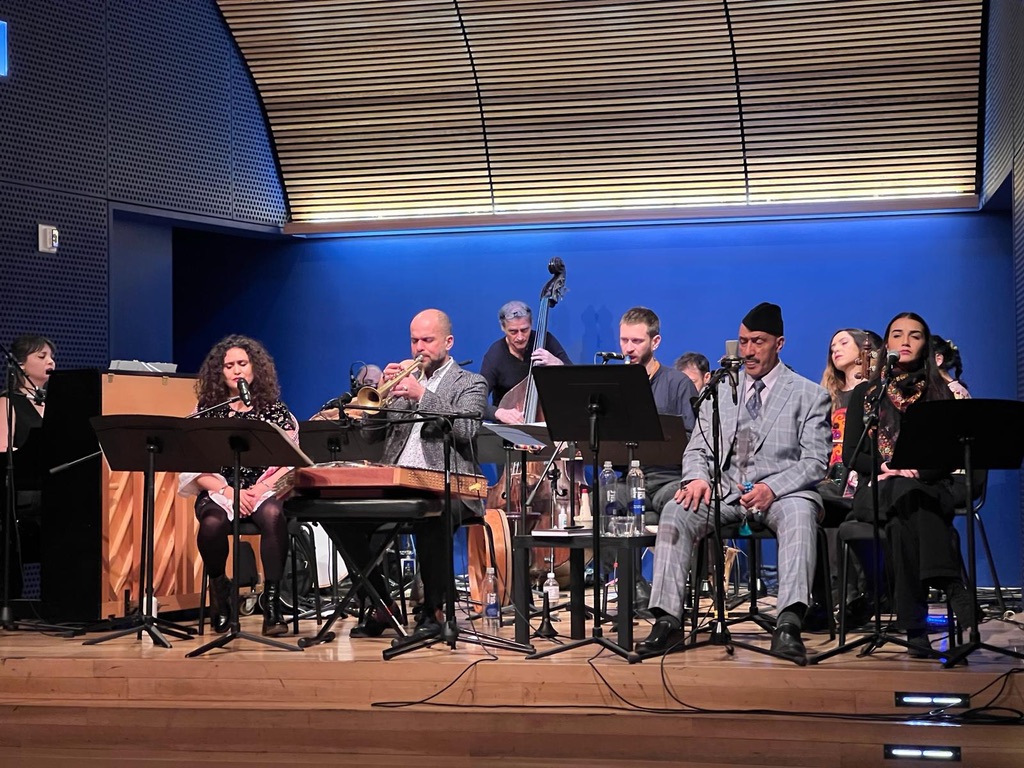
The music will feature my approach to combining the microtonal maqam modes with jazz improvisation and Western classical compositional practices, as featured in my recent work, Dhikra (Remembrance), commissioned by the Mostly Mozart Festival in 2023. Lead roles will be performed by five to seven singers who are native Arabic, Kurdish, Assyrian, and Turkmen speakers. Typical lyric operatic singing, or bel canto, will not be featured; instead, the work will showcase authentic Maqam singing native to the Arab world. The orchestra will consist of 25-30 musicians from Middle Eastern, jazz, and classical backgrounds, complemented by my analog modular synthesizer. Honoring the aesthetics of maqam music, particularly the concept of “tarab” (musical ecstasy), the performance will incorporate improvisation, spontaneous repetition, and reinterpretation, ensuring each performance is unique.
Al-Mu’allaqat, often referred to as “Golden Odes,” are epic poems of 7th century Arabia containing vivid imagery and metaphors. The traditional poems follow a tripartite structure: beginning at ruins of an abandoned campsite, followed by a desert journey where the hero faces adversities, concluding with transformation and reintegration into society. My opera adapts these themes with significant contemporary shifts: rather than nomadic tribal encampments in pre-Islamic Arabia, the story begins at a refugee camp in the 21st century Arab world. Instead of a male warrior-hero, the protagonist is a young woman forced into exile, separated from her family and her lover who belongs to a warring faction. The narrative follows her journey across the sea, her alienation in unfamiliar countries, and her longing to return to a homeland that no longer exists.
Through this work, I aim to raise awareness of the impacts of wars and systemic violence in the Arab world while exploring themes of displacement and exile. The narrative maintains a throughline of love, tenderness, and longing for homeland and connection. The set and costumes will blend imagery from ancient Iraq and the Arab and Muslim worlds with modern themes, exploring a new aesthetic of Iraqi/Arab Futurism. Ruins of the Encampment commits to provincializing the Western canon.

Jazz, Music, Opera, Performing Arts
2026
About Amir ElSaffar
Brooklyn, NY
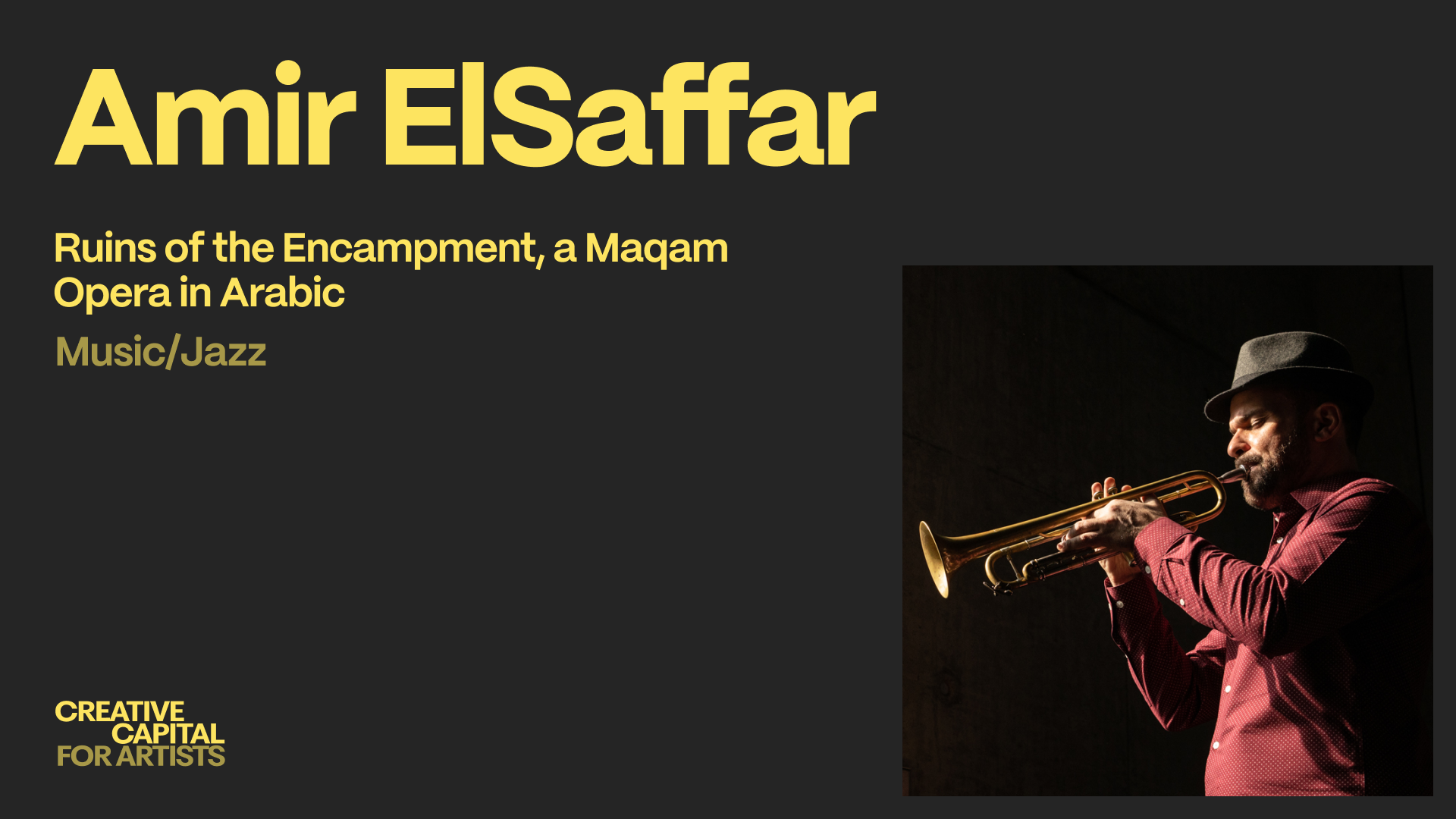
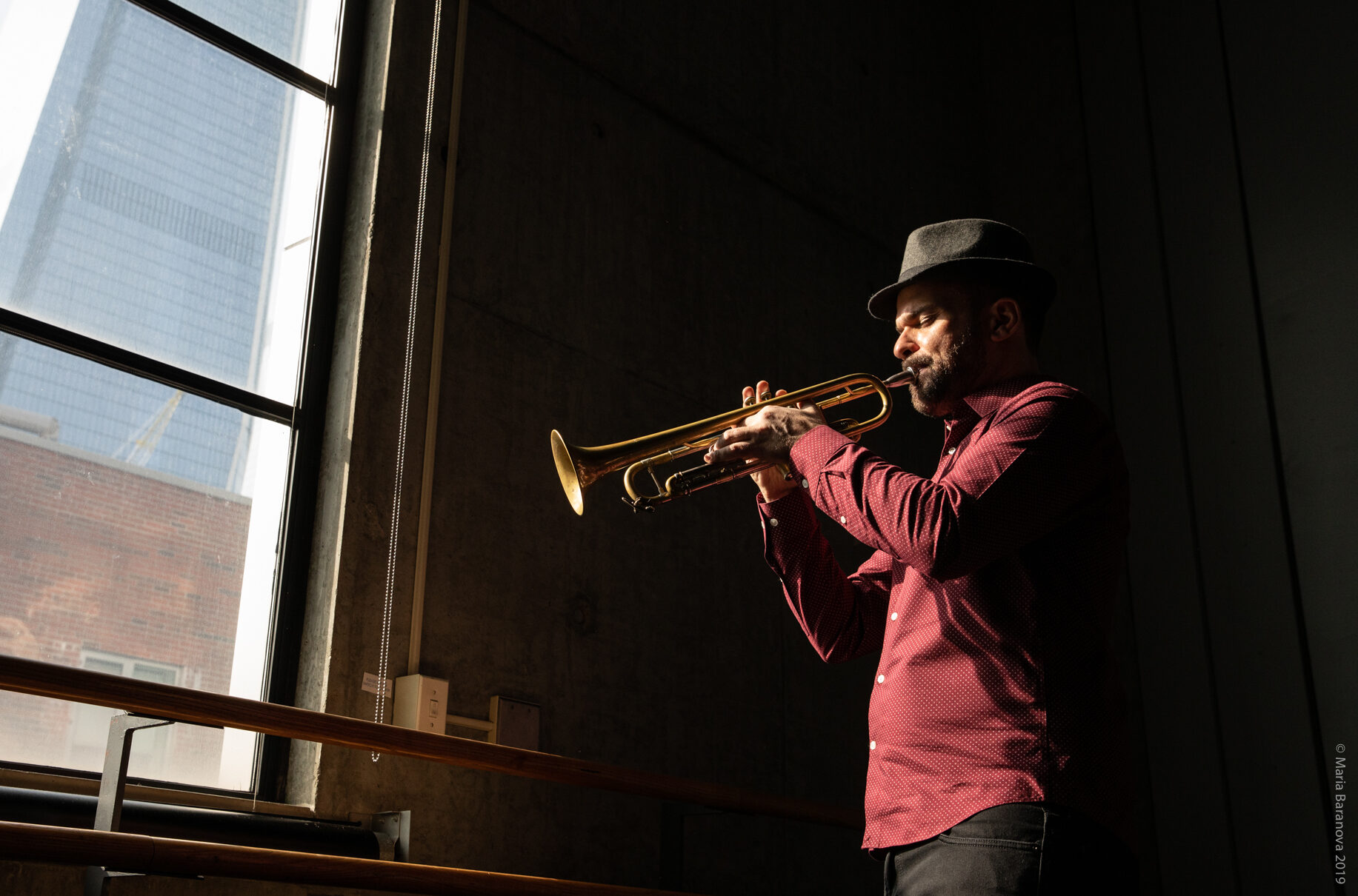 Described as “the celebrated trumpeter and composer who explores vital connections between jazz and Arabic music” (NYT), Amir ElSaffar is an Iraqi-American composer, trumpeter, santur player, and vocalist working at the intersections of jazz, Western classical, and Maqam music. ElSaffar has performed and toured with Cecil Taylor, Archie Shepp, Danilo Perez, Vijay Iyer, and Anthony Davis. He has also invented techniques to play microtones and Arabic ornaments on the trumpet. ElSaffar’s Two Rivers is a sextet combining Arabic and jazz instrumentation. Created in 2006, the group has merged Maqam modes with swing, group improvisation, and individual expression and interaction. The group expanded into the 17-piece Rivers of Sound Orchestra in 2015, and has released two albums and collaborated with symphony orchestras. ElSaffar received commissions from the Mostly Mozart Festival at Lincoln Center, Newport Jazz Festival, Berlin Jazz Festival, Dream City Festival, Festival d’Aix-en-Provence, Flamenco Biennale, among others. He has composed for symphony orchestras, chamber ensembles, large and small jazz ensembles, and hybrid projects with Raga, Flamenco, and Sub-Saharan African trance music. ElSaffar’s awards include the Doris Duke Performing Artist Award (2013), US Fellowship (2018), Hodder Fellowship at Princeton University (2020-2021) and a Mellon Foundation Arts and Culture Grant (2023-2028).
Described as “the celebrated trumpeter and composer who explores vital connections between jazz and Arabic music” (NYT), Amir ElSaffar is an Iraqi-American composer, trumpeter, santur player, and vocalist working at the intersections of jazz, Western classical, and Maqam music. ElSaffar has performed and toured with Cecil Taylor, Archie Shepp, Danilo Perez, Vijay Iyer, and Anthony Davis. He has also invented techniques to play microtones and Arabic ornaments on the trumpet. ElSaffar’s Two Rivers is a sextet combining Arabic and jazz instrumentation. Created in 2006, the group has merged Maqam modes with swing, group improvisation, and individual expression and interaction. The group expanded into the 17-piece Rivers of Sound Orchestra in 2015, and has released two albums and collaborated with symphony orchestras. ElSaffar received commissions from the Mostly Mozart Festival at Lincoln Center, Newport Jazz Festival, Berlin Jazz Festival, Dream City Festival, Festival d’Aix-en-Provence, Flamenco Biennale, among others. He has composed for symphony orchestras, chamber ensembles, large and small jazz ensembles, and hybrid projects with Raga, Flamenco, and Sub-Saharan African trance music. ElSaffar’s awards include the Doris Duke Performing Artist Award (2013), US Fellowship (2018), Hodder Fellowship at Princeton University (2020-2021) and a Mellon Foundation Arts and Culture Grant (2023-2028).