
Book 13: After the Conquest – Codex Rodriguez Mondragon
Book 13: After the Conquest – Codex Rodriguez Mondragon
Sandy Rodriguez
Sandy Rodriguez
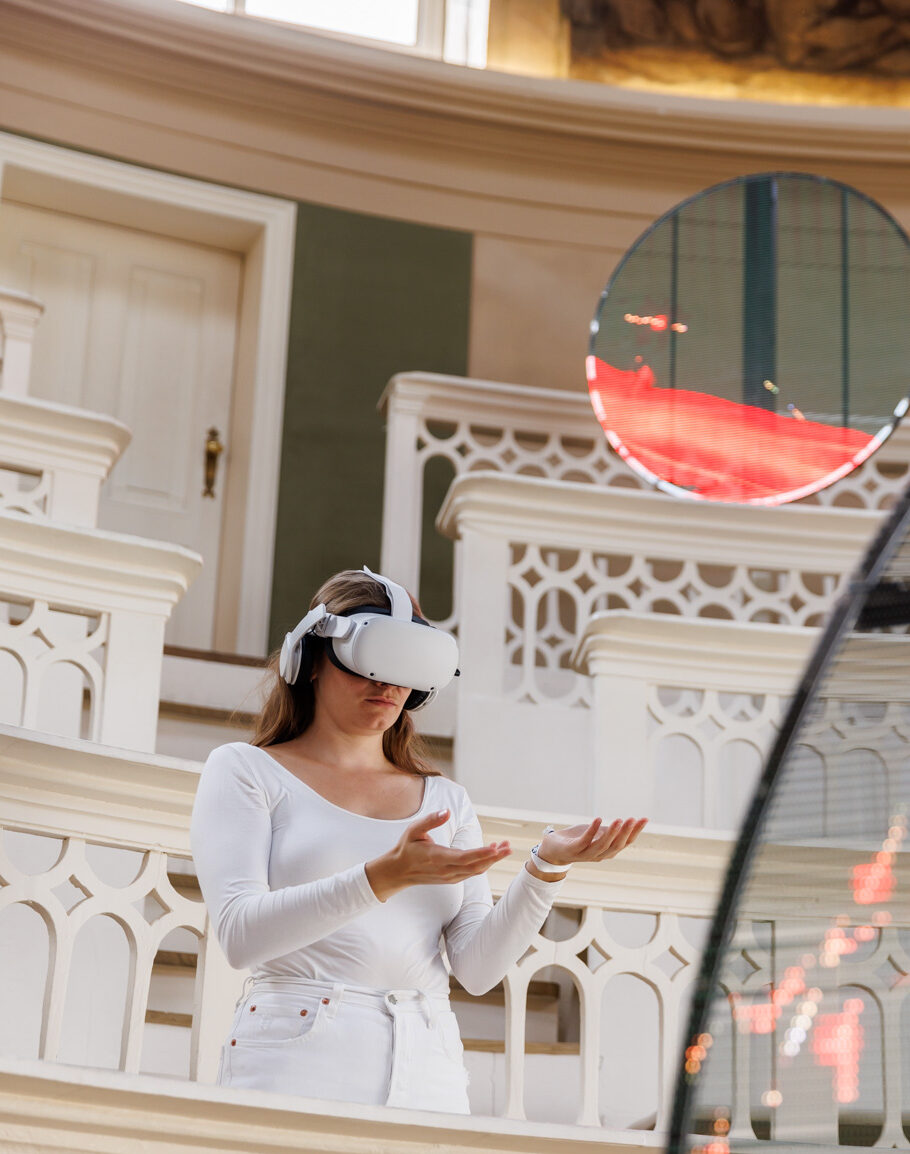
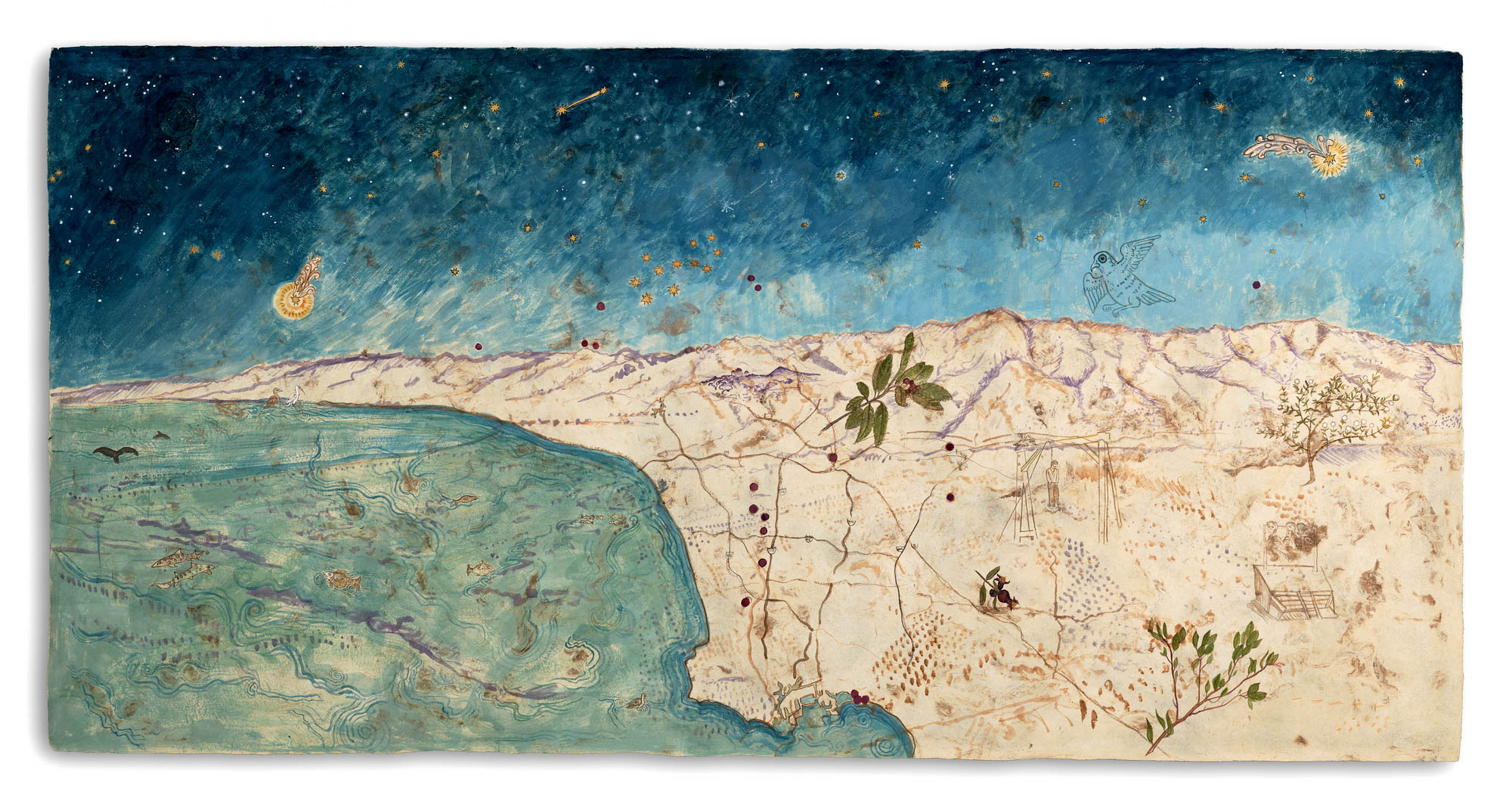
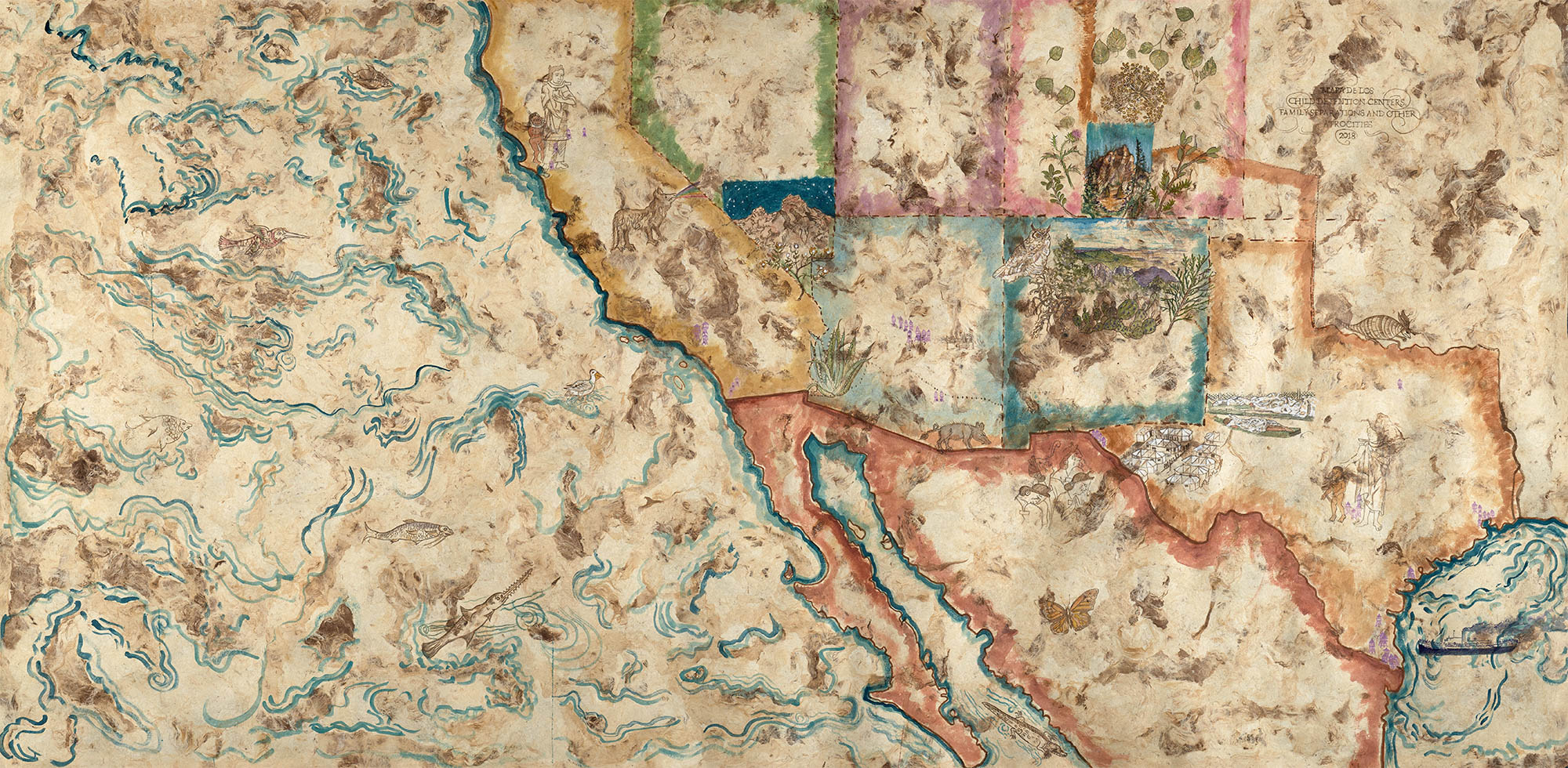
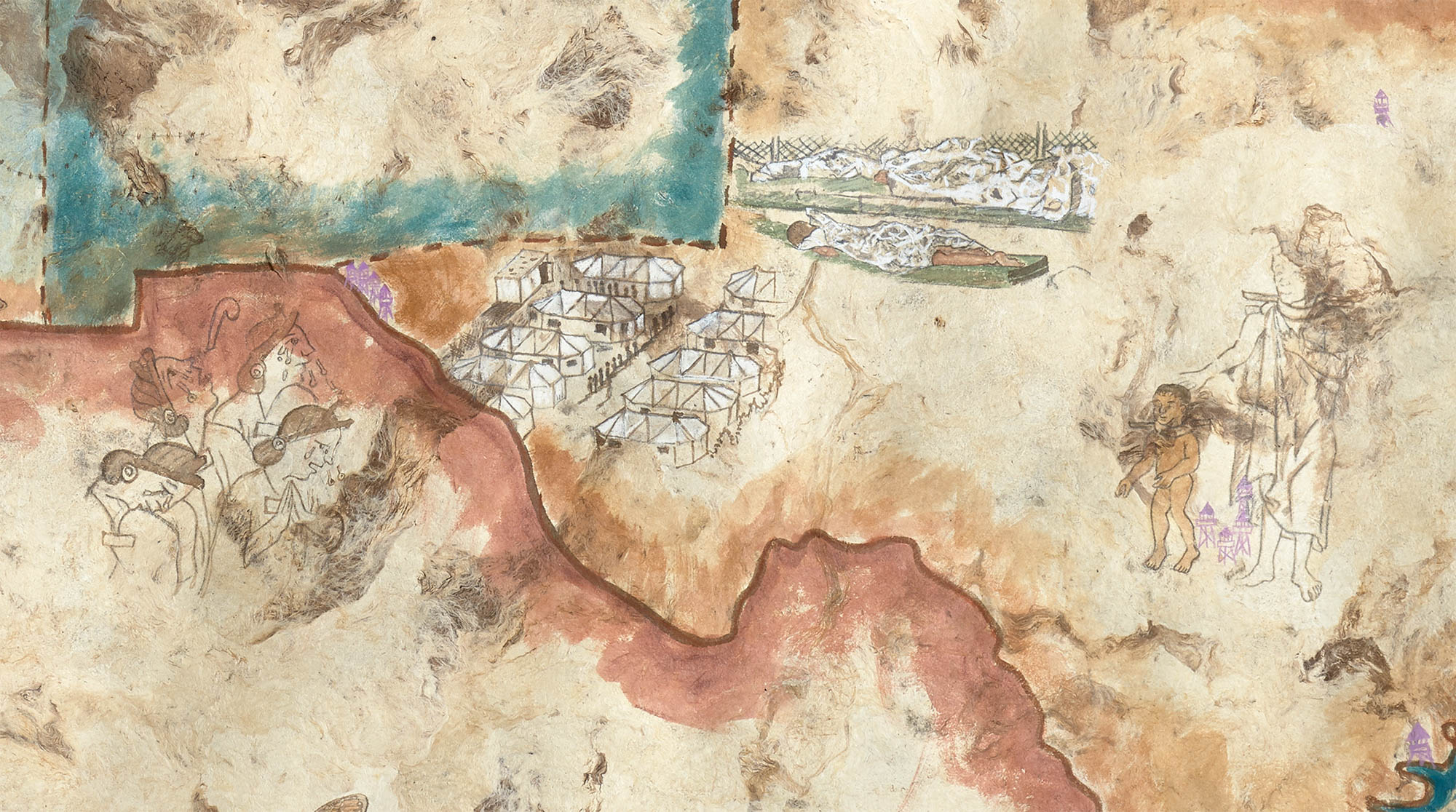
Amidst intensifying human rights abuses across the nation and at the U.S.-Mexico border, Sandy Rodriguez unveils a monumental interdisciplinary research project for a year-long museum exhibition. Drawing on a range of colonial Mexican sources in dialogue with 19th-century maps and boundary surveys from The Huntington’s library collections, the installation brings together research on place, ecology, and regional histories.
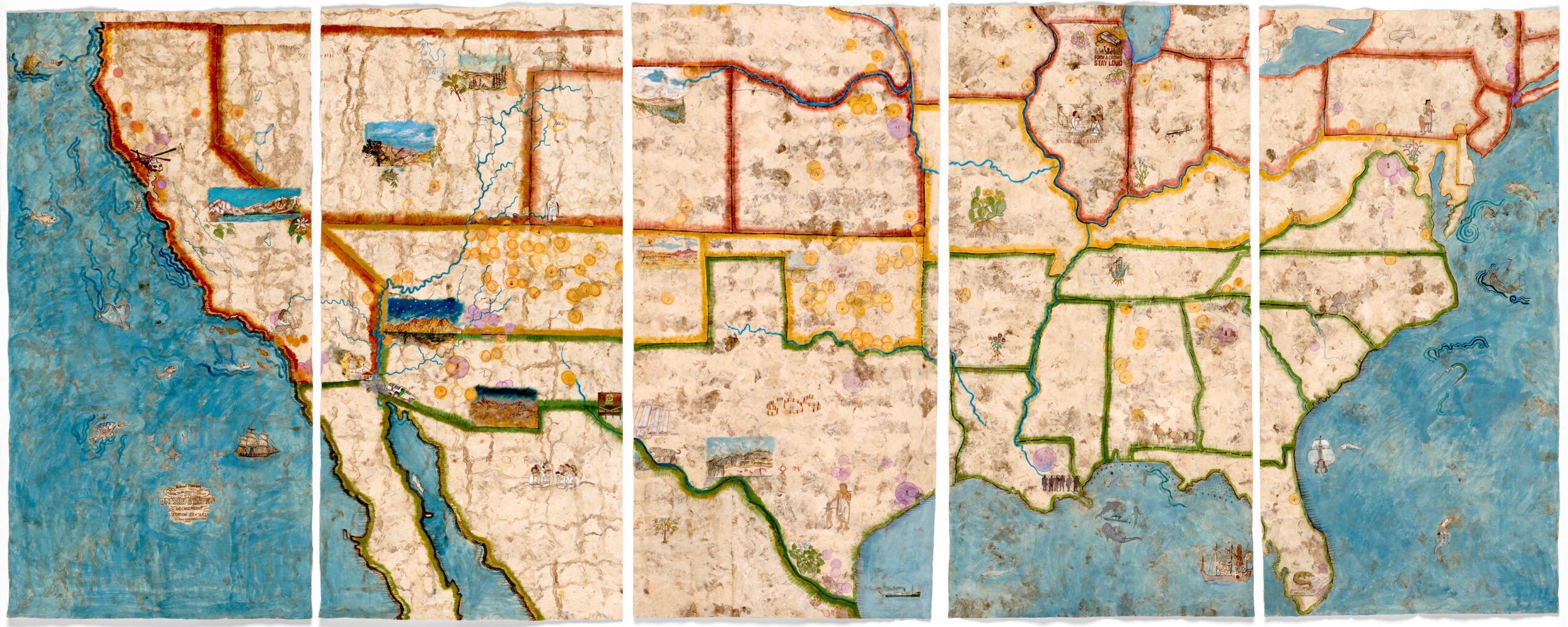
This work synthesizes 16th-century Mexican colonial and 19th-century American sources with contemporary reports to explore past and present periods of resistance. The project culminates in an installation premiering Book 13—a hand-gilded artist codex—alongside a 20 x 8-foot map of the United States. Featuring new paintings and sculptures created with hand-processed watercolor on amate paper, as well as archival materials from the Huntington Library, Art Museum, and Botanical Gardens, this exhibition offers a profound visual exploration of archives to understand the present and create a space for reflection.
Installation, Painting & Printmaking, Visual Arts
2021
About Sandy Rodriguez
Los Angeles, CA
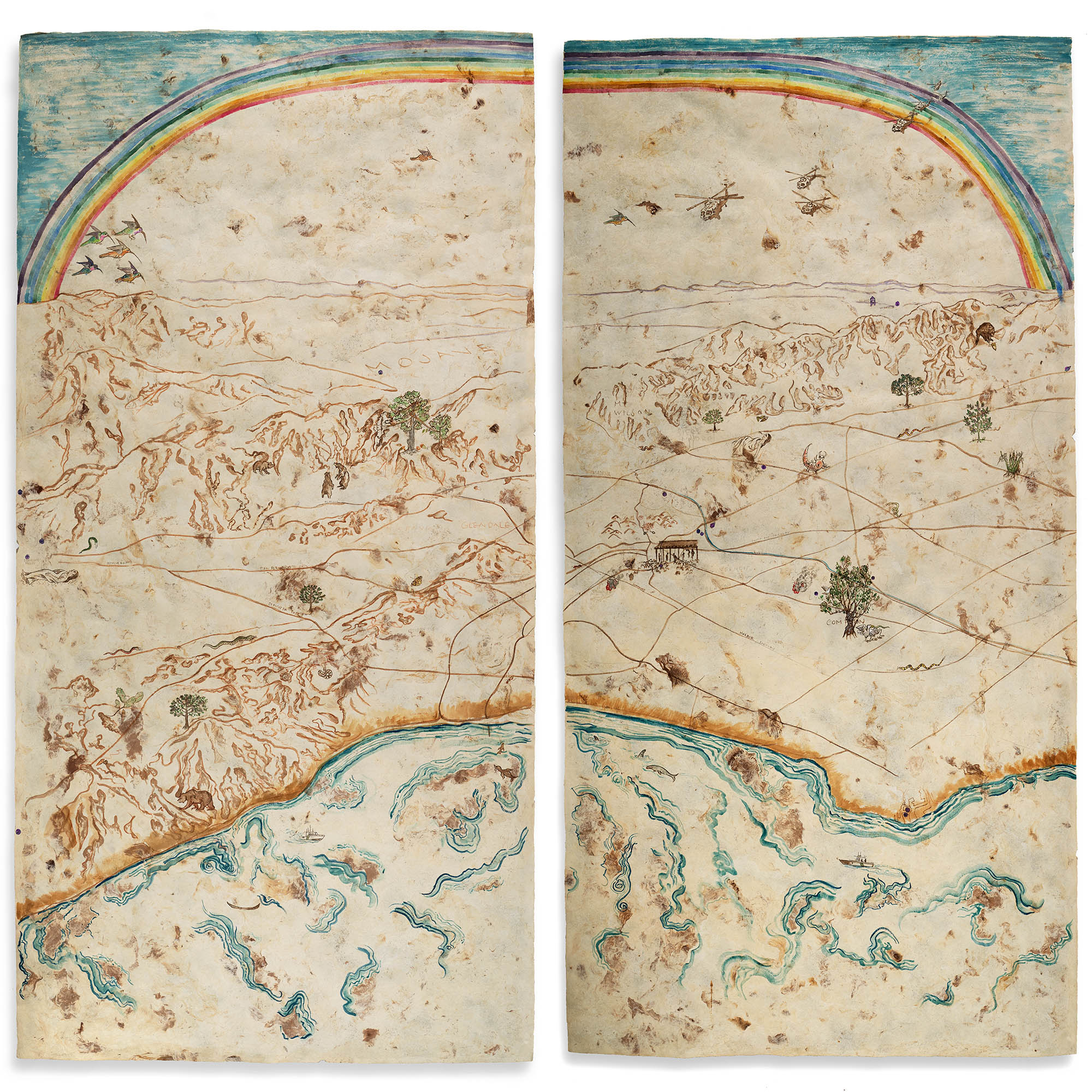
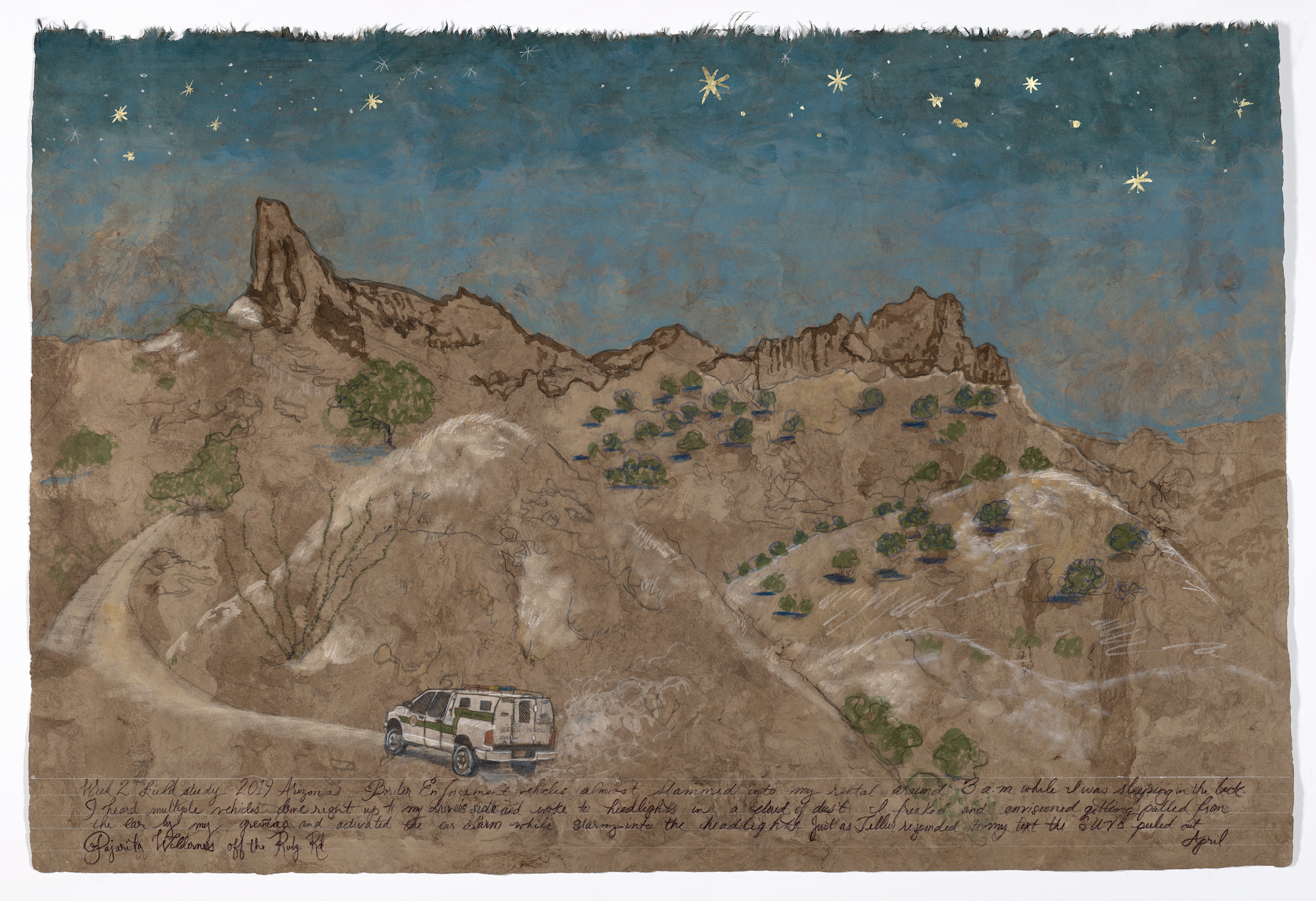
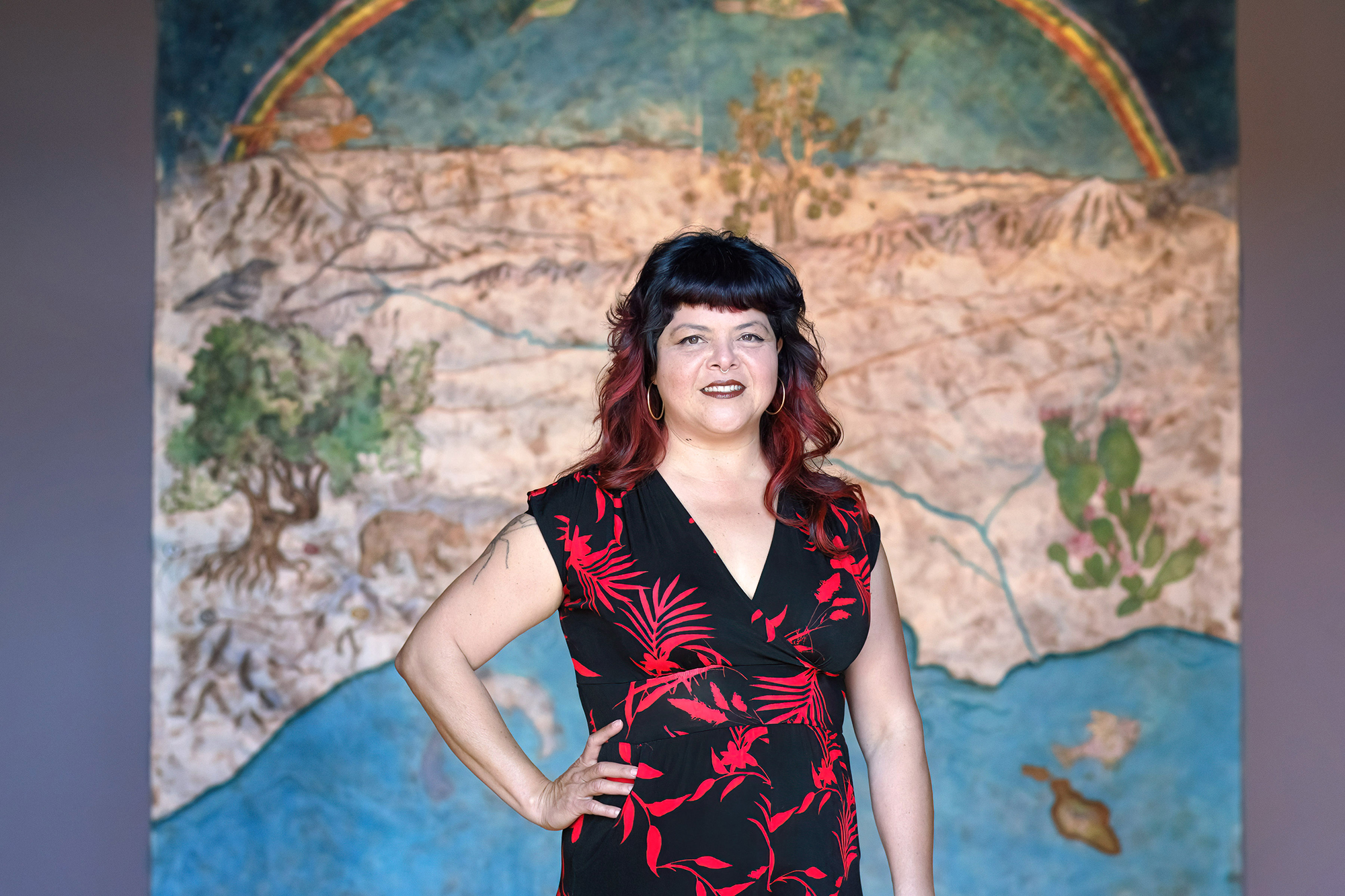 Sandy Rodriguez is a visual artist and researcher who grew up in San Diego and Los Angeles in California, and Tijuana, Baja California, Mexico. Her works map intersections of history, social memory, and contemporary politics. Strongly influenced by both the 16th-century colonial Florentine Codex and present-day incidents along the US-Mexico border and Western US, her series Codex Rodriguez-Mondragón maps the ongoing cycles of violence on communities of color by blending historical and recent events. The maps are painted with locally sourced natural materials such as minerals, plants, and insects employed in history of image making of the Americas. The images are painted on sacred (formerly outlawed) Amate paper made from fig and mulberry tree bark. In addition to her major solo exhibitions In Isolation (Amon Carter Museum of American Art, Texas, 2021) and Sandy Rodriguez: Codex Rodriguez-Mondragón (Riverside Art Museum, California, 2018), she has also presented her work at the group exhibitions Traitor, Survivor, Icon: The Legacy of La Malinche (Denver Art Museum, Colorado, 2022) and Estamos Bien: La Trienal 20/21 (El Museo del Barrio, New York, 2021).
Sandy Rodriguez is a visual artist and researcher who grew up in San Diego and Los Angeles in California, and Tijuana, Baja California, Mexico. Her works map intersections of history, social memory, and contemporary politics. Strongly influenced by both the 16th-century colonial Florentine Codex and present-day incidents along the US-Mexico border and Western US, her series Codex Rodriguez-Mondragón maps the ongoing cycles of violence on communities of color by blending historical and recent events. The maps are painted with locally sourced natural materials such as minerals, plants, and insects employed in history of image making of the Americas. The images are painted on sacred (formerly outlawed) Amate paper made from fig and mulberry tree bark. In addition to her major solo exhibitions In Isolation (Amon Carter Museum of American Art, Texas, 2021) and Sandy Rodriguez: Codex Rodriguez-Mondragón (Riverside Art Museum, California, 2018), she has also presented her work at the group exhibitions Traitor, Survivor, Icon: The Legacy of La Malinche (Denver Art Museum, Colorado, 2022) and Estamos Bien: La Trienal 20/21 (El Museo del Barrio, New York, 2021).